
PCOS Is Now PMOS — What Changed, What Didn’t, and Why Every Woman in India Needs to Know
Should You Upgrade to M.Sc Nursing After B.Sc.? An Honest Career Guide for Working Nurses
April 1, 2026Government vs Private Nursing College in Punjab: How to Decide
June 6, 2026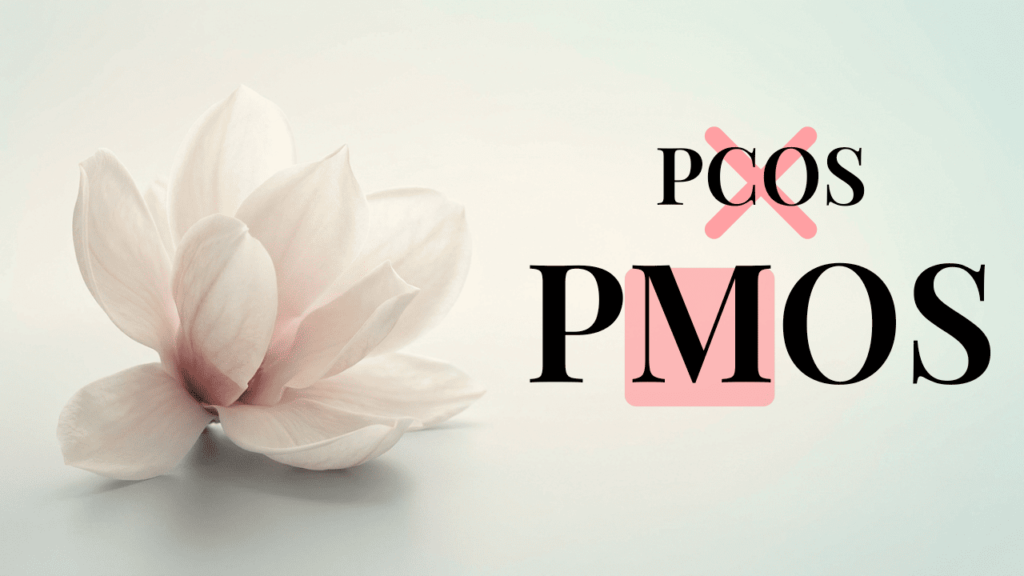
One of the most common hormonal conditions affecting women worldwide just got a new name — and it is about time.
On May 12, 2026, a global medical consensus published in The Lancet officially renamed Polycystic Ovary Syndrome (PCOS) to Polyendocrine Metabolic Ovarian Syndrome (PMOS). The announcement was made at the European Congress of Endocrinology in Prague, and it marks the conclusion of a 14-year collaborative effort involving clinicians, researchers, and patients from six continents.
This is not a cosmetic update. It is a recognition that the condition was fundamentally misnamed — and that the old name was actively harming millions of women by delaying their diagnosis, reducing their condition to “a problem with the ovaries,” and causing them to question whether they even had it at all.
At Mata Sahib Kaur College of Nursing, Balongi, Mohali, we believe nursing professionals and nursing students need to understand this change deeply — because PMOS is a condition that nurses will encounter across their entire careers, in gynaecology wards, endocrine clinics, community health centres, and OPDs. And more immediately: millions of young women in India are living with this condition right now — possibly without knowing it.
Let’s break it down clearly.
What Was PCOS? What Is PMOS?
PCOS — Polycystic Ovary Syndrome — was a name that described the condition primarily through what doctors saw on an ultrasound: what appeared to be multiple “cysts” on the ovaries. But this was always incomplete and, in many cases, outright misleading.
Here is the scientific reality:
- Many women diagnosed with PCOS do not actually have ovarian cysts at all
- What ultrasounds detect are not true cysts but arrested follicles — eggs that stop developing properly because of hormonal disruptions
- The condition extends far beyond the ovaries — it is a disorder of the endocrine (hormonal) and metabolic systems, affecting the entire body
The new name — Polyendocrine Metabolic Ovarian Syndrome (PMOS) — was chosen to reflect this reality accurately:
- Poly-endocrine: Multiple hormone systems are disrupted, not just one
- Metabolic: The condition is deeply tied to insulin resistance, weight regulation, and metabolic health
- Ovarian: The ovaries are still affected — but they are not the whole story
- Syndrome: It is a cluster of interrelated symptoms and risks, not a single, simple disease
The diagnostic criteria have not changed. If you were diagnosed with PCOS before May 2026, your diagnosis is still valid. The condition is the same. What has changed is how accurately it is now named — and what that accuracy means for how it is understood, diagnosed, and treated.
How Big Is This Problem — Especially in India?
PMOS affects more than 170 million women worldwide — that is more than 1 in 8 women of reproductive age globally.
In India, the picture is alarming. Studies estimate prevalence rates ranging from 3.7% to over 22% depending on the region and diagnostic method — and researchers widely believe that actual rates are much higher because the condition is vastly underdiagnosed. Indian women with PMOS also appear to face higher metabolic complications at younger ages compared to women in Western populations.
The reasons for underdiagnosis in India include:
- Stigma around menstrual and reproductive health — irregular periods are often normalised or dismissed, especially in adolescents
- The misleading old name — women who did not have visible cysts were told they couldn’t have PCOS
- Limited access to specialists — most PMOS management requires an endocrinologist, gynaecologist, and in many cases a nutritionist and mental health professional working together; this kind of multi-disciplinary care is not equally available across India
- The condition being treated only as a fertility problem — which means women who are not yet trying to conceive often go unmanaged for years
What Are the Symptoms of PMOS?
The symptoms of PMOS are the same as what was previously described as PCOS:
Hormonal and reproductive:
- Irregular, absent, or unpredictable menstrual cycles
- Excess androgen (male sex hormone) — causing facial and body hair growth (hirsutism), acne, scalp hair thinning
- Difficulty conceiving
- Multiple immature ovarian follicles visible on ultrasound (in some, not all, patients)
Metabolic:
- Insulin resistance — the body’s cells do not respond efficiently to insulin
- Difficulty losing weight, or unexplained weight gain
- Fatigue and low energy, often related to blood sugar dysregulation
- Higher long-term risk of Type 2 diabetes, hypertension, and fatty liver disease
Mental health:
- Depression and anxiety — significantly higher rates than in the general population
- Body image concerns
- The psychological impact of a condition that is often dismissed or poorly explained
To receive a diagnosis, a patient must exhibit at least two of three criteria: irregular ovulation; elevated androgen levels; or ultrasound showing 20 or more antral follicles.
Why the Old Name Was Causing Real Harm
This is the part that matters most — and the reason this name change took 14 years to bring about.
When a condition is named after a symptom that many patients don’t even have, what happens? Patients go to doctors saying “I have irregular periods and acne and I can’t lose weight” — and the doctor orders an ultrasound, finds no visible cysts, and tells them they don’t have PCOS. End of consultation.
The patient leaves confused. Her real symptoms — the insulin resistance, the androgen excess, the hormonal disruption — go unaddressed. She spends years managing what she thinks are separate, unconnected problems: the skin issues, the weight, the mood, the fatigue.
This happened to millions of women. The misunderstanding was not the patient’s fault. It was built into the name.
As NIH experts noted in supporting documentation for the renaming: “The name focuses on a criterion — polycystic ovarian morphology — which is neither necessary nor sufficient to diagnose the syndrome”.
The new name, PMOS, removes that trap. It signals to clinicians and patients alike that this condition is systemic — and that diagnosis should not depend on finding cysts.
What Stays the Same
The treatment approach for PMOS remains what it was for PCOS:
Lifestyle management (first-line for most patients):
- Regular physical activity — even a 5–10% reduction in body weight significantly improves hormonal profiles and metabolic markers in women with PMOS
- Balanced nutrition — specifically reducing refined carbohydrates and processed sugars to support insulin regulation
- Consistent sleep — poor sleep worsens insulin resistance and cortisol dysregulation
- Stress reduction — chronic stress amplifies androgen production
Medical management (where needed):
- Combined oral contraceptives — to regulate menstrual cycles and manage androgen effects
- Metformin — insulin-sensitising medication that also improves menstrual regularity
- Inositol supplements — increasingly used in evidence-based practice to improve insulin sensitivity
- Targeted fertility treatment — when conception is the primary concern
- Spironolactone or similar anti-androgen medications — for severe hirsutism or androgen-related symptoms
Multidisciplinary care (the gold standard):
- Endocrinologist for metabolic and hormonal management
- Gynaecologist for reproductive health
- Nutritionist for dietary intervention
- Mental health professional — because the psychological burden of PMOS is significant and often undertreated
The Role of Nurses in PMOS Care — And Why This Matters for Nursing Students
Here is what is not discussed enough in nursing education — and what the renaming of this condition now makes impossible to ignore: PMOS is not just a gynaecology problem. It is a community health problem, a metabolic health problem, and a mental health problem.
That means nurses encounter it everywhere.
In community health settings (ANM and GNM trained nurses):
A community health nurse conducting maternal health screenings, school health programmes, or anganwadi visits is often the first point of contact for a young woman with undiagnosed PMOS. The ability to recognise symptoms — irregular cycles, unexplained weight gain, skin changes, fatigue — and refer appropriately can mean the difference between early management and a decade of unaddressed metabolic damage.
In OPDs and general medicine wards (B.Sc Nursing and GNM):
A ward nurse who understands that PMOS is a metabolic condition will know to monitor blood glucose, blood pressure, and weight trends as part of routine care — not just ask about periods. This is clinical knowledge that makes a difference.
In mental health and counselling contexts:
Nurses trained in mental health nursing will increasingly encounter PMOS as a comorbid condition. The anxiety, depression, and body image distress associated with PMOS are not secondary — they are part of the syndrome and require as much clinical attention as the hormonal symptoms.
In gynaecology and endocrinology specialisations:
For B.Sc Nursing graduates pursuing specialisation — or for M.Sc Nursing students in Obstetrics & Gynaecological Nursing — PMOS management will be a core clinical skill set. The shift to PMOS framing will require nurses to assess and document a broader set of parameters, coordinate with multi-disciplinary teams, and support patient education around a condition that most women still misunderstand.
What the PMOS Name Change Means for Healthcare Education in India
The transition to PMOS will be phased over three years and fully integrated into the 2028 International Guideline update. During this transition:
- Healthcare professionals will need to update their understanding of the condition’s full scope
- Medical and nursing curricula will need to reflect the new terminology
- Patient-facing communication — pamphlets, screening tools, OPD handouts — will need revision
- Community awareness campaigns will need to re-educate the public that PCOS and PMOS refer to the same condition, but that PMOS is now the accurate and complete term
This is precisely the kind of update that nursing education must stay ahead of. At Mata Sahib Kaur College of Nursing, Mohali, we incorporate current clinical knowledge into our teaching — because the nurses we train will be working in wards and communities where this transition is already beginning.
A Note for Young Women Reading This
If you have been told you might have PCOS — or if you have symptoms like irregular periods, unexplained weight changes, acne, facial hair, fatigue, or difficulty managing your weight — this name change is relevant for you.
It does not change your diagnosis. But it does change the conversation you can now have with your doctor.
You are no longer looking for cysts on an ultrasound as the defining proof of your condition. PMOS is a hormonal and metabolic syndrome — and it can be identified, managed, and treated based on your full symptom picture.
Ask for a full assessment. Ask about insulin resistance. Ask about your androgen levels. Ask about the mental health component. Ask to be seen completely — not partially.
You deserve a diagnosis that reflects the full reality of what you are living with.
Key Takeaways
- PCOS was officially renamed PMOS — Polyendocrine Metabolic Ovarian Syndrome — on May 12, 2026, published in The Lancet
- The name change followed a 14-year global consensus led by Monash University, involving experts across six continents
- The old name was misleading — many women with the condition do not have ovarian cysts
- PMOS affects 1 in 8 women globally — over 170 million — and is severely underdiagnosed in India
- The condition involves the endocrine system, metabolism, reproductive health, and mental health simultaneously
- Diagnostic criteria and treatment have not changed — only the framing has become more accurate
- Nurses across all specialisations — community health, gynaecology, general medicine, mental health — will encounter PMOS patients regularly
- Full adoption of PMOS terminology is targeted for the 2028 International Guideline update
At Mata Sahib Kaur College of Nursing, Balongi, Mohali, we train nurses who stay current with global developments in healthcare — because their patients will need them to. If you are a student or a professional who would like to learn more about our nursing programmes, visit